
Welder Jobs in India: A Comprehensive Guide to Opportunities and Growth
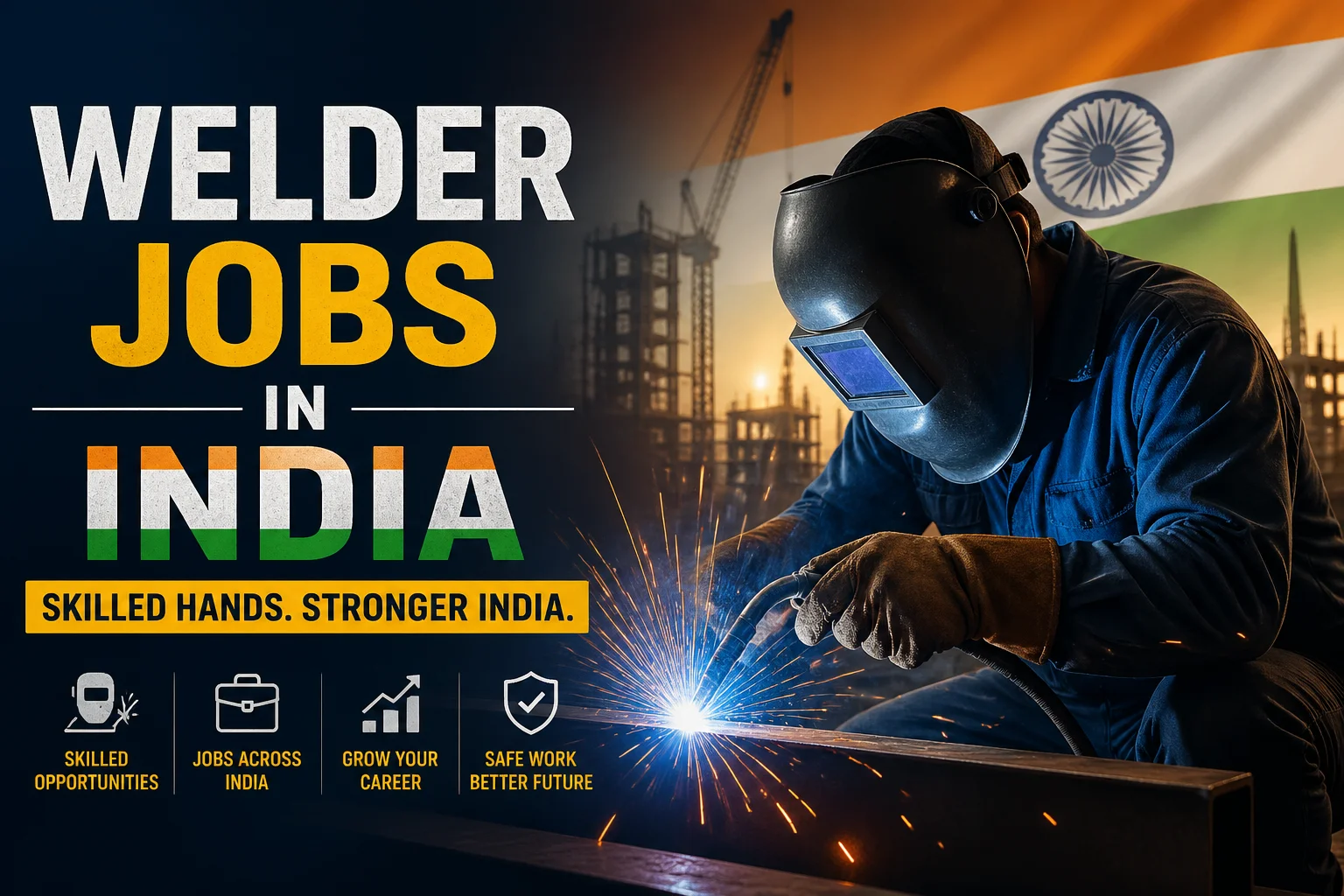
Welding is a critical skill in various industries, from construction to manufacturing, and the demand for skilled welders in India is on the rise. With rapid industrialization and infrastructure development, welder jobs in India offer promising career opportunities for individuals with the right training and expertise. This guide explores the scope, qualifications, salary expectations, and top industries hiring welders in India.
What Are Welder Jobs?
Welder jobs involve joining metal parts together using heat and specialized equipment. Welders work with materials like steel, aluminum, and other alloys to create structures, repair machinery, or fabricate components. These professionals are essential in industries such as automotive, shipbuilding, construction, and aerospace. In India, welders are often employed in both urban and rural settings, contributing to small-scale workshops as well as large industrial projects.
Types of Welding Jobs in India
There are several types of welding techniques, and each requires specific skills. Some common welding job roles in India include:
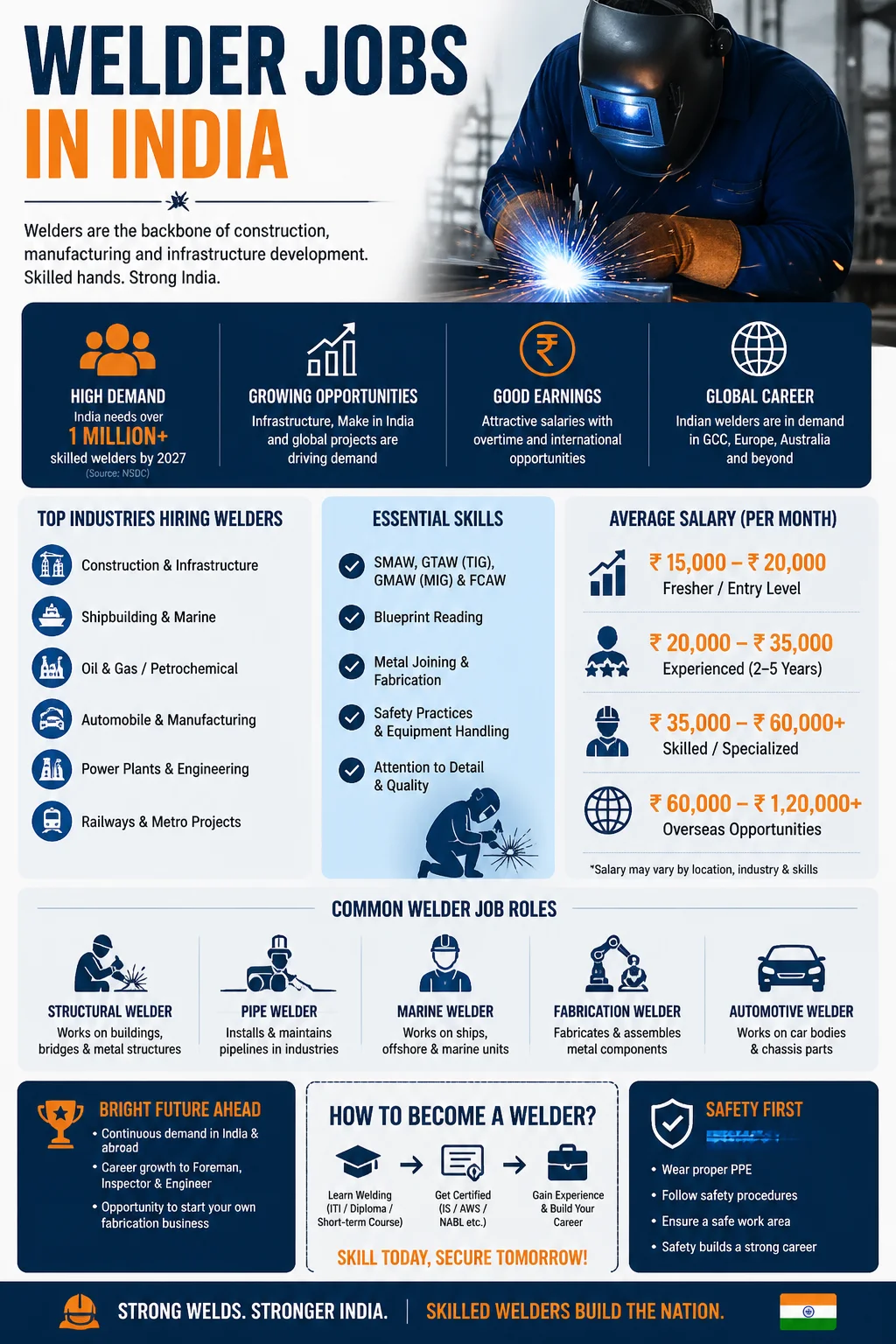
- Arc Welders: Use electric arcs to fuse metals, commonly employed in construction and manufacturing.
- TIG Welders: Specialize in Tungsten Inert Gas welding for precision work, often in aerospace or automotive industries.
- MIG Welders: Use Metal Inert Gas welding, ideal for thicker materials and widely used in fabrication.
- Underwater Welders: Work on underwater structures like pipelines and ships, a high-risk but high-paying role.
- Robotic Welders: Operate automated welding machines in advanced manufacturing units.
Qualifications and Skills Required for Welder Jobs
To secure a welder job in India, candidates need a combination of formal education, technical training, and practical skills. Here are the key requirements:
- Educational Background: A minimum of 10th or 12th standard education is often required, though some roles may not demand formal qualifications.
- Technical Training: Certification courses from Industrial Training Institutes (ITIs) or vocational schools are highly valued. Courses typically cover welding techniques, safety protocols, and blueprint reading.
- Skills: Precision, physical stamina, attention to detail, and knowledge of safety standards are crucial. Familiarity with different welding equipment and techniques is a plus.
- Certifications: Specialized certifications like AWS (American Welding Society) or Indian Welding Society credentials can enhance employability.
Top Industries Hiring Welders in India
Welders are in demand across multiple sectors in India due to ongoing infrastructure projects and industrial growth. Some of the top industries include:
- Construction: Welders are needed for building bridges, skyscrapers, and other structures.
- Manufacturing: Factories producing machinery, tools, and consumer goods hire welders for fabrication and repair.
- Automotive: The booming automobile sector requires welders for assembling vehicle parts.
- Shipbuilding: Coastal regions like Mumbai and Visakhapatnam offer opportunities in ship construction and repair.
- Oil and Gas: Welders maintain pipelines, rigs, and other equipment in this sector.
Salary Expectations for Welders in India
The salary for welder jobs in India varies based on experience, location, and industry. Entry-level welders can expect to earn between INR 10,000 to INR 20,000 per month. With 3-5 years of experience, salaries can range from INR 25,000 to INR 40,000 per month. Highly skilled welders, especially those in specialized fields like underwater welding, can earn upwards of INR 50,000 per month. Metropolitan cities like Mumbai, Delhi, and Bangalore often offer higher pay compared to rural areas.
Job Opportunities and Growth Prospects
India’s focus on initiatives like 'Make in India' and large-scale infrastructure projects such as smart cities and metro rail networks has boosted the demand for skilled welders. Additionally, the growth of renewable energy projects, such as wind and solar farms, requires welders for constructing metal frameworks. With proper training and experience, welders can advance to supervisory roles, start their own workshops, or even work abroad in countries with high demand for skilled labor.
Challenges in the Welding Profession
While welder jobs offer rewarding opportunities, they come with challenges. Welders often work in hazardous environments, exposed to heat, fumes, and noise. Physical strain and the risk of injuries are also concerns. However, adhering to safety protocols and using protective gear can mitigate these risks. Additionally, continuous learning is essential to keep up with evolving technologies like robotic welding.
How to Find Welder Jobs in India
Finding welder jobs in India is easier with the right approach. Here are some tips:
- Online Job Portals: Websites like Naukri.com, Indeed, and Monster India list numerous welding job openings.
- Local Workshops: Small-scale fabrication units and repair shops often hire welders through word-of-mouth or local advertisements.
- Networking: Joining welding communities or attending industry expos can help connect with potential employers.
- Apprenticeships: Starting as an apprentice in a reputed company can lead to full-time opportunities.
Conclusion
Welder jobs in India present a lucrative and stable career path for individuals with technical skills and a willingness to learn. As industries continue to grow, the demand for skilled welders will only increase, making it an ideal time to enter this field. Whether you’re a fresher or an experienced professional, investing in training and certifications can open doors to rewarding opportunities in this dynamic profession.