
Welder Jobs in the United States: Opportunities and Insights
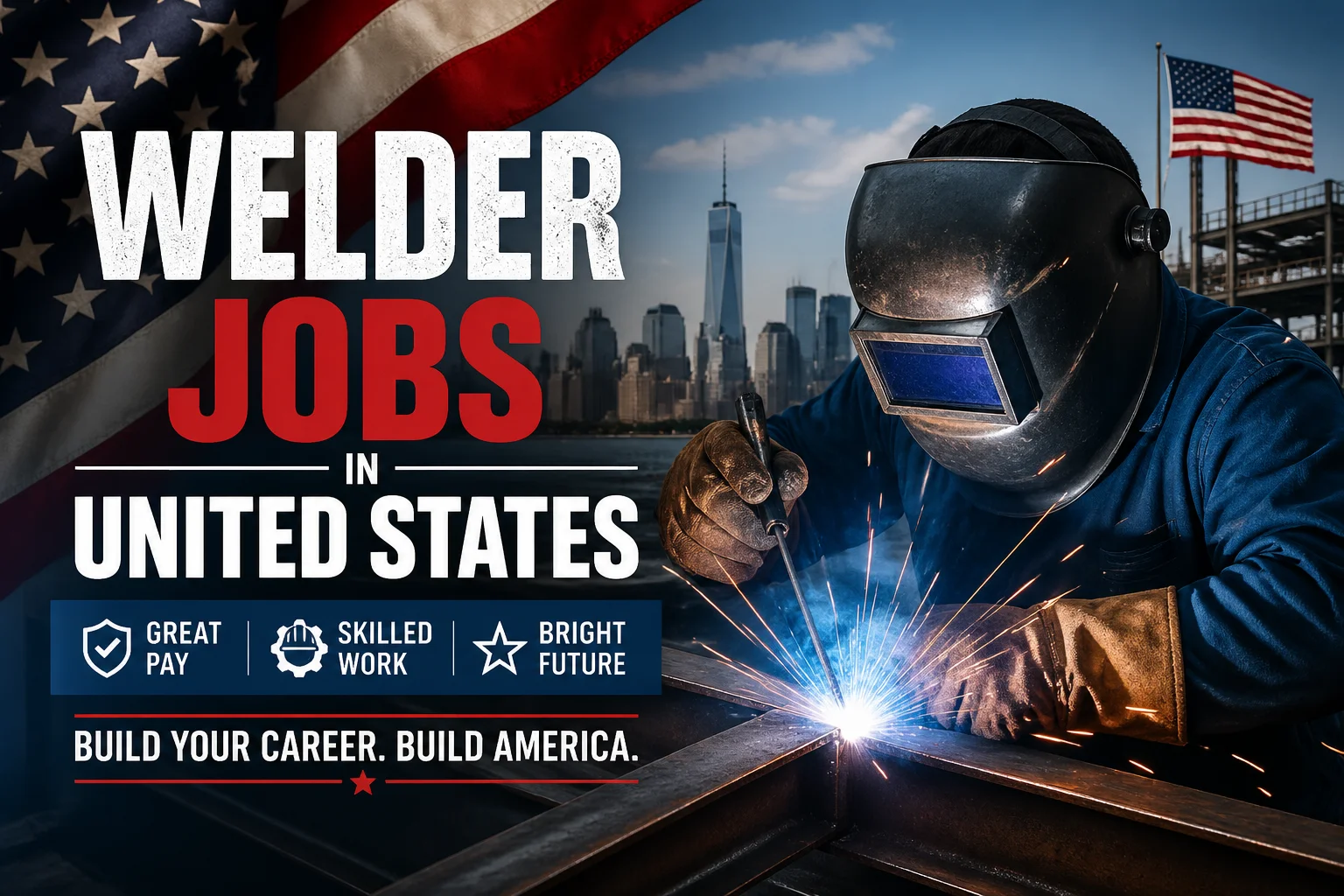
Welding is a critical trade in the United States, supporting industries like construction, manufacturing, automotive, and energy. Welder jobs offer stable career paths, competitive salaries, and opportunities for growth. If you're considering a career in welding or looking for welder jobs in the United States, this guide provides everything you need to know about the industry, job requirements, salary expectations, and how to find opportunities.
What Are Welder Jobs?
Welder jobs involve joining metal parts together using heat and specialized equipment. Welders work with materials like steel, aluminum, and other alloys to create structures, repair equipment, or fabricate components. They are essential in industries such as shipbuilding, pipeline construction, aerospace, and automotive repair. Welders may specialize in techniques like MIG, TIG, or stick welding, depending on the job requirements.
Types of Welder Jobs in the United States
The welding field offers diverse roles based on skill level, industry, and specialization. Here are some common types of welder jobs:
- Structural Welders: Work on building frameworks for bridges, buildings, and other large structures.
- Pipe Welders: Specialize in welding pipelines for oil, gas, and water systems, often in high-demand energy sectors.
- Manufacturing Welders: Focus on assembling products in factories, including machinery and consumer goods.
- Underwater Welders: Perform specialized welding tasks underwater, often for offshore oil rigs or ship repairs.
- Aerospace Welders: Work on aircraft components, requiring precision and adherence to strict safety standards.
Requirements for Welder Jobs
While some welder positions are entry-level, most require specific skills and qualifications. Here’s what you need to get started:
- Education: A high school diploma or GED is often the minimum requirement. Many welders attend vocational schools or community colleges for formal training programs.
- Certification: Certifications from organizations like the American Welding Society (AWS) can boost employability and demonstrate expertise in specific welding techniques.
- Skills: Welders must have good hand-eye coordination, attention to detail, and the ability to read blueprints or technical diagrams.
- Physical Fitness: The job often involves lifting heavy materials, working in confined spaces, or standing for long periods.
- Safety Training: Knowledge of safety protocols is crucial, as welding involves high heat, hazardous materials, and protective gear.
Salary and Job Outlook for Welders in the United States
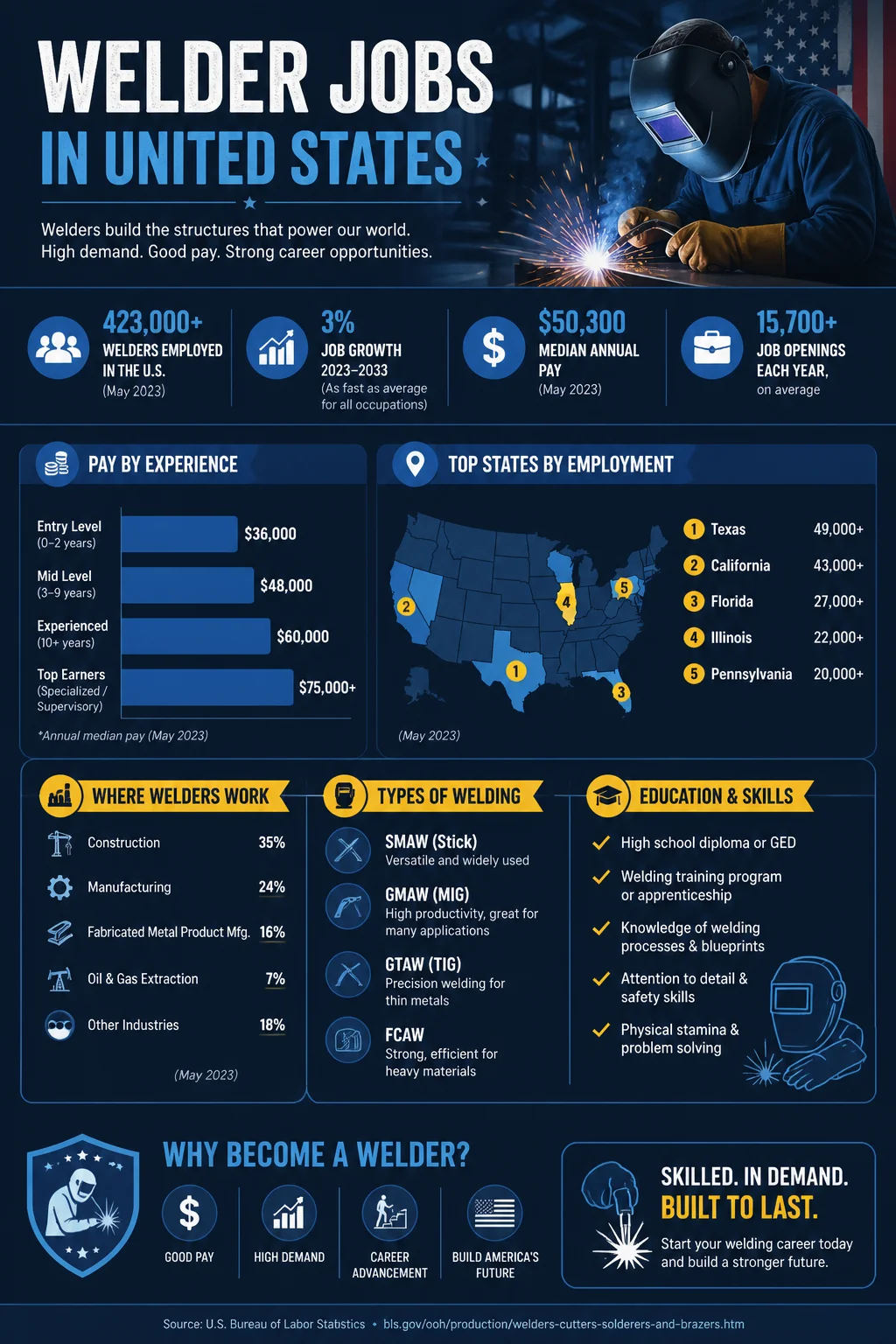
According to the U.S. Bureau of Labor Statistics (BLS), the median annual wage for welders, cutters, solderers, and brazers was approximately $47,000 as of recent data, with top earners making over $63,000. Salaries vary based on experience, location, and industry. For instance, welders in the energy sector or specialized fields like underwater welding often earn higher wages.
The job outlook for welders is promising, with steady demand projected over the next decade. Industries like infrastructure development and renewable energy are driving growth, creating more opportunities for skilled welders. States like Texas, California, and Louisiana, with strong oil and gas sectors, often have the highest concentration of welder jobs.
How to Find Welder Jobs in the United States
Finding welder jobs requires a strategic approach. Here are some tips to help you land a position:
- Online Job Boards: Websites like Indeed, Monster, and LinkedIn list thousands of welder job openings across the country.
- Trade Unions: Joining a union, such as the United Association, can provide access to job opportunities and training programs.
- Networking: Connect with industry professionals through trade shows, local welding associations, or social media groups.
- Apprenticeships: Many companies offer paid apprenticeships, allowing you to gain hands-on experience while earning a salary.
- Local Businesses: Contact construction firms, manufacturing plants, or repair shops in your area for potential openings.
Challenges and Rewards of a Welding Career
Like any profession, welding comes with its challenges. Welders often work in physically demanding environments, face exposure to fumes, and may need to travel for projects. However, the rewards are significant. Welding offers job security, the satisfaction of building tangible structures, and the potential for entrepreneurship by starting your own welding business.
Conclusion
Welder jobs in the United States provide a fulfilling career path for those with the right skills and determination. With diverse opportunities across industries, competitive pay, and a strong job outlook, now is an excellent time to enter the field. Whether you're a beginner or an experienced welder, take advantage of training programs, certifications, and job search resources to build a successful career in welding.